

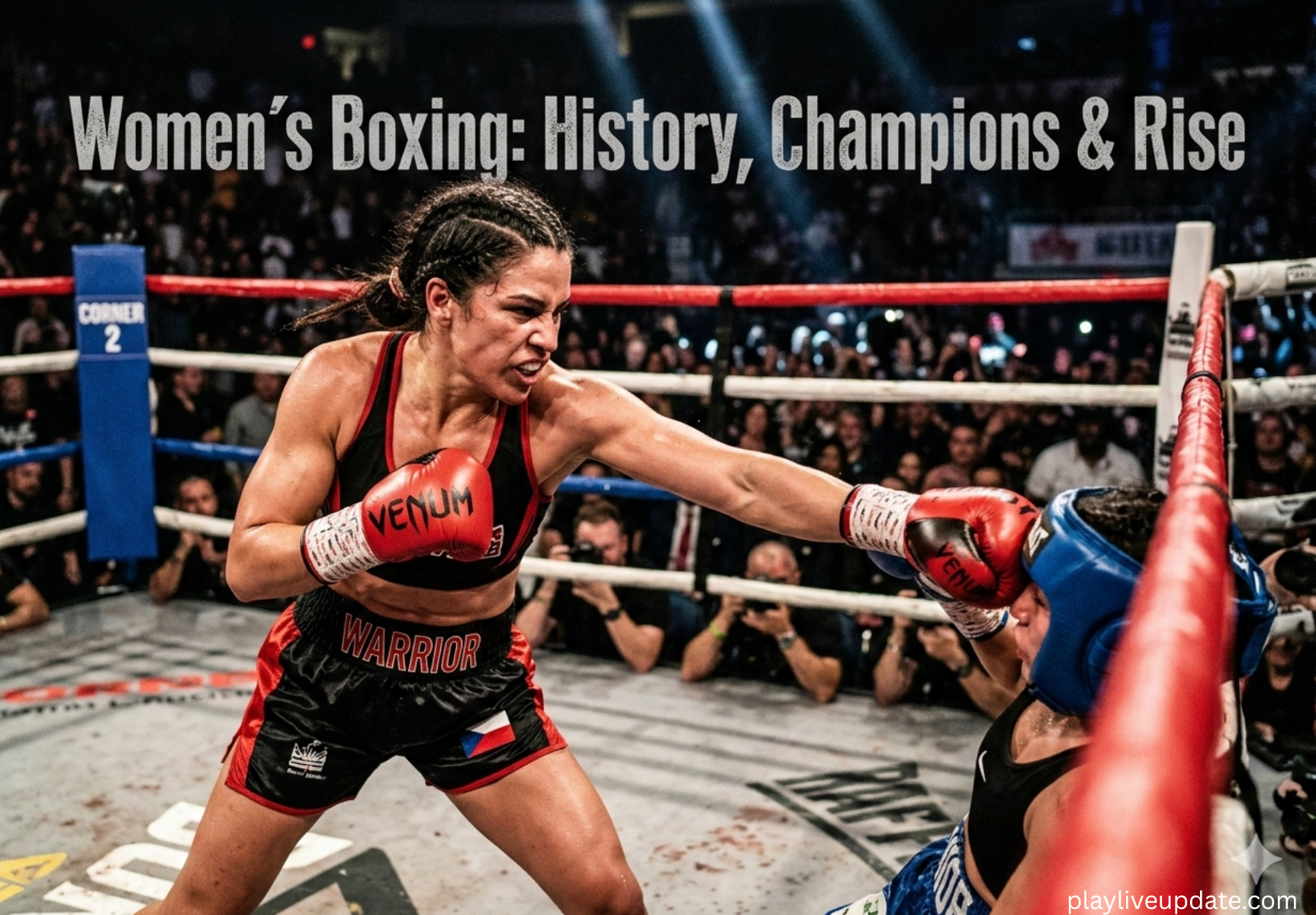
Women’s Boxing: History, Rules, Top Fighters and Global Rise
Women’s boxing has grown into one of the most exciting combat sports in the modern athletic world. Although the history of women’s boxing stretches back centuries, the sport gained global recognition only in recent decades. Today, talented female boxing athletes compete in international arenas, professional leagues, and major women boxing championships that attract millions of fans.
In fact, the rise of Olympic women’s boxing has pushed the sport into mainstream attention, especially in countries like the United States and the United Kingdom. As more training programs and professional opportunities appear, the women boxing evolution continues rapidly. Modern fighters now inspire a new generation of athletes who want to enter the ring and prove that skill, discipline, and courage define champions.
Introduction to Women’s Boxing
Women’s boxing refers to organized competition between trained female fighters using established women boxing rules and professional standards. Over time, the history of women’s boxing has evolved dramatically. Today, women amateur boxing programs, professional leagues, and international female boxing competitions support athletes worldwide.
Furthermore, the rise of women professional boxing reflects wider acceptance of women in combat sports. Across training centers and women boxing clubs, thousands of athletes prepare for regional fights, national women boxing championships, and international female boxing tournaments worldwide.
History and Evolution of Women’s Boxing
The women’s boxing history stretches back more than three centuries. Early reports describe female fighters appearing in London exhibitions during the eighteenth century. Despite social resistance, several women’s boxing pioneers kept the sport alive through unofficial contests and public demonstrations. These early struggles shaped the history of women’s boxing and paved the way for future champions.
Later, the twentieth century accelerated the women boxing evolution. Important tournaments such as the Women World Amateur Boxing Championships introduced formal structures for female boxing competitions. Eventually, the International Olympic Committee (IOC) approved Olympic women’s boxing, and the historic 2012 London Olympics boxing tournament crowned the first women Olympic boxing medalists, marking a milestone in women boxing Olympic history.
Women Boxing Weight Classes

Fair competition requires carefully defined female boxing weight classes. Fighters compete against opponents of similar body weight, which protects safety and ensures balanced matches. Most women boxing tournaments follow standard divisions recognized by the International Boxing Association (IBA) and other female boxing organizations.
The most common female boxing weight classes include divisions from 46 kg to more than 80 kg. These divisions allow female boxing athletes to compete fairly while maintaining athletic performance. Because of these rules, fighters prepare strategically through structured women’s boxing training programs.
| Weight Division | Approximate Weight |
| Light Flyweight | 46–48 kg |
| Flyweight | 48–51 kg |
| Bantamweight | 51–54 kg |
| Featherweight | 54–57 kg |
| Lightweight | 57–60 kg |
| Welterweight | 60–65 kg |
| Middleweight | 70–75 kg |
| Heavyweight | 80+ kg |
Rules and Differences Between Men’s and Women’s Boxing
Although boxing fundamentals remain identical, certain women boxing rules differ from men’s competitions. Typically, women’s fights include shorter rounds and greater protective equipment. Governing groups such as the World Boxing Council (WBC) and the International Boxing Association (IBA) establish these regulations to maintain safety during female boxing matches.
Additionally, technical differences influence fight strategies. Many coaches emphasize speed, endurance, and precision in women’s boxing training. Because of these characteristics, women professional boxing often delivers fast-paced bouts that highlight technical skill rather than sheer physical force.

Major Women Boxing Championships and Organizations
Several global bodies regulate women boxing championships and maintain standards for international fights. The International Boxing Association (IBA) oversees amateur competitions, while the World Boxing Council (WBC) and World Boxing Federation organize professional titles and rankings for female boxing champions.
Meanwhile, major tournaments continue to expand opportunities for Olympic female boxers and rising contenders. Prestigious competitions such as the Women’s World Amateur Boxing Championships attract participants from dozens of countries and contribute significantly to women’s boxing global growth.
| Organization | Role in Women’s Boxing |
| International Boxing Association (IBA) | Governs amateur boxing |
| World Boxing Council (WBC) | Oversees professional championships |
| World Boxing Federation | Supports global title fights |
| Olympic committees | Manage Olympic women’s boxing events |
Top Female Boxers Who Shaped the Sport

The modern era of women professional boxing features remarkable fighters whose achievements inspire future athletes. Champions such as Mary Kom, Katie Taylor, and Claressa Shields transformed the sport through dedication, skill, and consistent victories in women boxing world titles competitions.
Similarly, global icons including Amanda Serrano, Nicola Adams, and Cecilia Brækhus helped expand the popularity of female boxing sport worldwide. Their championship bouts, especially the famous Madison Square Garden boxing event, proved that elite professional female boxers could headline major arenas.
Women’s Boxing Around the World
The women boxing evolution extends across continents. In the United States, professional promotions regularly host female boxing tournaments worldwide, drawing international fighters and enthusiastic fans. Meanwhile, strong amateur systems in the United Kingdom and India continue producing skilled Olympic female boxers.
Elsewhere, countries such as Mexico and Saudi Arabia increasingly invest in female boxing promotion. These regions organize competitive leagues and encourage young athletes to join local women boxing clubs, strengthening the worldwide development of the female boxing sport.

The Rise in Media and Promotions
Media coverage has dramatically accelerated women’s boxing global growth. Television broadcasts, streaming platforms, and sports documentaries now feature elite female boxing matches and championship fights. This exposure encourages sponsors to support women boxing championships and promotes rising female boxing athletes.
Historic fights further boosted popularity. For instance, the celebrated Madison Square Garden boxing event featuring Katie Taylor and Amanda Serrano attracted worldwide attention and confirmed that women professional boxing can rival the biggest events in the sport.
Challenges Faced by Female Boxers
Despite progress, several obstacles still affect professional female boxers. Many athletes experience lower sponsorship deals and limited broadcast opportunities compared with male fighters. These financial barriers sometimes restrict participation in major female boxing competitions.
Additionally, cultural attitudes in some regions slow the women boxing evolution. However, advocacy from governing groups and athletes continues improving women’s boxing governance. Training programs and expanding women boxing clubs now help young fighters pursue careers in female boxing sport.
Future of Women’s Boxing
The future of women boxing appears extremely promising. Increased visibility, improved funding, and expanding international tournaments encourage new generations of female boxing athletes. As more countries support youth programs, the number of women amateur boxing participants continues rising.
Experts predict further expansion of Olympic women boxing and additional global women boxing championships. With rising stars competing for women boxing world titles, the sport’s influence will likely grow throughout the United States and across international arenas.
FAQ’s
1: Who are the current champions in women boxing?
Currently, Claressa Shields, Katie Taylor, Amanda Serrano, Mary Kom, Cecilia Brækhus, and Nicola Adams hold major women boxing world titles across multiple weight classes.
2: What are the weight classes in women boxing?
Women’s boxing includes flyweight, bantamweight, featherweight, lightweight, welterweight, middleweight, and heavyweight, ensuring fair matches.
3: How to get started in women boxing?
First, join a women boxing club, focus on training, and gradually participate in female boxing tournaments.
4: What are the rules of women boxing?
Matches follow women boxing rules, with gloves, rounds, and safety gear; scoring favors clean hits and defense.
5: What is the history of women boxing?
Women’s boxing evolved from 18th-century exhibitions to Olympic women boxing in 2012 London Olympics boxing, now thriving globally.
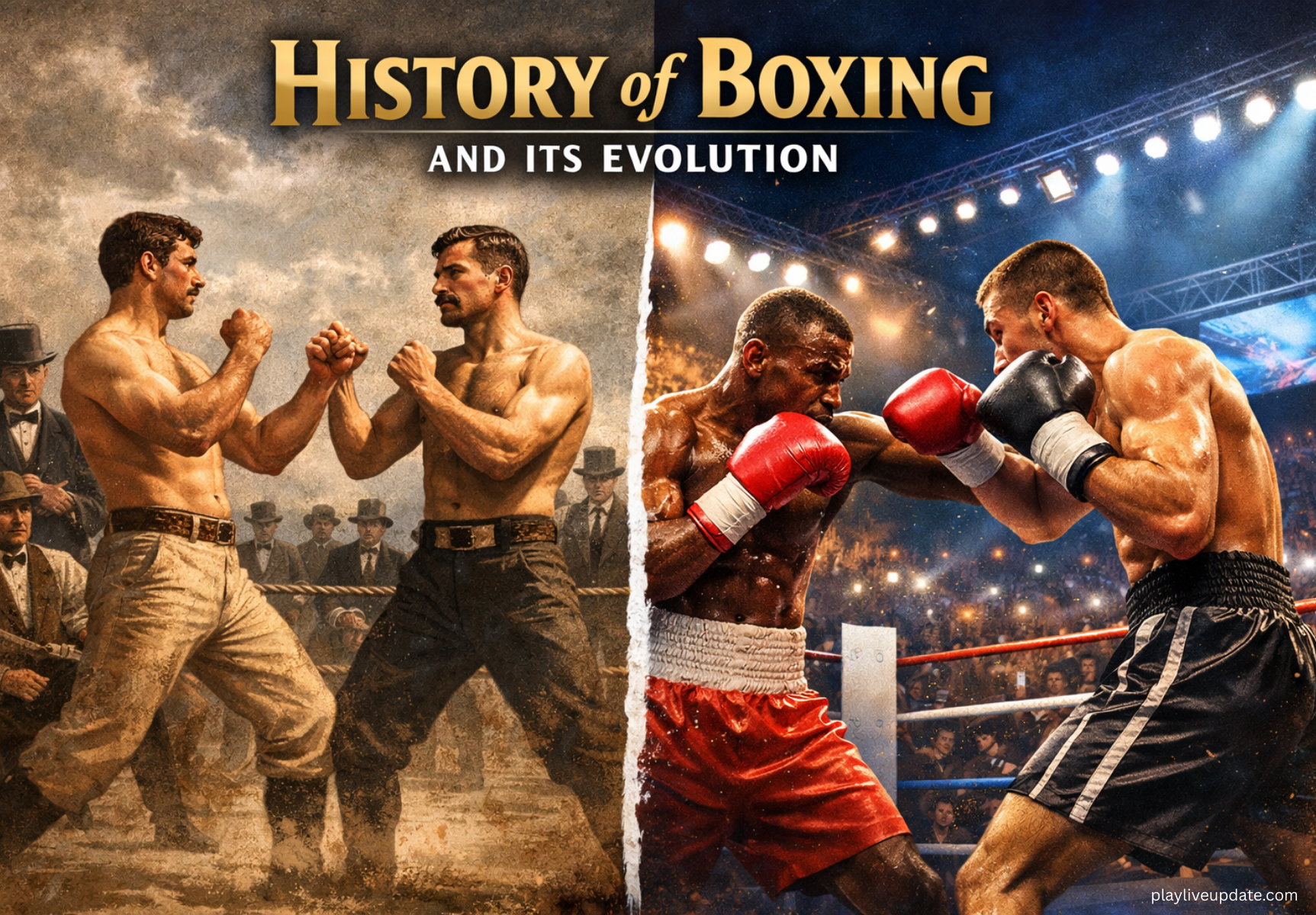
You can also visit History of Boxing and Its Evolution: From Ancient Combat to Modern Global Sport



Leave a Reply